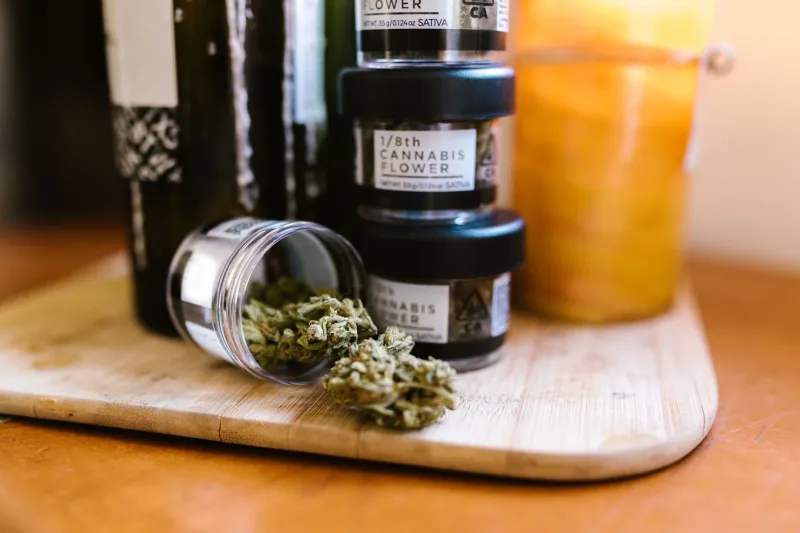
Green Friday, Every April: Inside the Deal-Making Machine That Is 4/20
There was a time when April 20th meant a parking lot, a circle of friends, and absolutely no commerce involved. These days it means email blasts, percentage-off banners, and a checkout line out the door of your local dispensary.
4/20 has become the cannabis industry's Black Friday — and depending on who you ask, that's either a sign of a maturing market or a quiet betrayal of the holiday's roots.
From Counterculture Code to Corporate Calendar
The origins are well-worn folklore by now: a group of California high schoolers in the 1970s who met at 4:20 p.m. to hunt for an abandoned cannabis crop, and the phrase stuck. For decades, 4/20 was a word-of-mouth wink, a way to identify your people without saying anything out loud.
Then legalization happened, and the wink became a marketing opportunity.
The scale of the shift is hard to overstate. Industry data trackers like BDSA and Headset have consistently shown April 20th ranking at or near the top of annual dispensary sales days, with single-day sales in the legal market regularly topping $150 million nationally — and total 4/20-week spending estimated well north of $400-500 million when you count the surrounding promotional window. Dispensaries routinely see sales on April 20th that run two to three times a typical day's volume.
The Discount Wars
Talk to dispensary operators and you'll hear the same tension repeated: you can't opt out of 4/20, but participating hurts.
"If you're not running a deal, you're invisible that day," one dispensary owner in Michigan told us. "But when everyone's running 30, 40 percent off, you're basically fighting over customers at a loss. It's a race to the bottom with confetti on it."
The math is unforgiving. Cannabis margins are already squeezed by taxes that stack at every level, plus the 280E federal tax code provision that blocks standard business deductions for state-legal operators. Layer deep promotions on top and some shops admit their 4/20 sales are barely more profitable than a random Tuesday — just louder.
That's why the smartest operators have started treating 4/20 less like a clearance event and more like a customer acquisition play. The bet: bring people in with a loss leader, then convert them with loyalty programs and a shopping experience good enough to survive the other 364 days.
What the Data Says About a Maturing Market
The sales numbers tell an interesting story beyond the raw volume. In recent years, analysts have noted that the 4/20 spike, while still real, has flattened somewhat in mature markets like Colorado and Oregon. When cannabis is legal and accessible year-round, the novelty of a holiday haul fades.
Meanwhile, newer markets — New York, Connecticut, parts of the Midwest — are seeing explosive first-time 4/20 numbers as the holiday doubles as a coming-out party for freshly opened dispensaries.
Product mix has shifted too. Flower still dominates the day, but pre-rolls have become the 4/20 MVP, growing faster than almost any other category around the holiday. They're festive, shareable, and perfect for the social, celebratory mood of the date. Meanwhile, edibles and beverages are quietly pulling in the crowd that wants to participate without smoking.
Has the Holiday Lost Its Soul?
Ask the old guard and you'll get an eye roll. The commercialization of 4/20 mirrors what happened to another counterculture holiday — you can guess which one — and some longtime consumers feel the spirit of the day has been flattened into a promo code.
But others push back, and not without reason. Public 4/20 celebrations in places like Denver's Civic Center Park, San Francisco's Hippie Hill, and the University of Colorado's famously chaotic Norlin Quad still draw tens of thousands of people for events that are more festival than flash sale. For communities that spent decades facing arrest and stigma, a mainstream holiday where cannabis is celebrated openly — even with a corporate sheen — reads as a kind of vindication.
There's also a practical argument: for consumers, 4/20 is genuinely one of the best times of the year to stock up. The deals are real, even if the margins aren't.
The Verdict for Now
4/20 in 2025 is both things at once: a genuine community celebration and a hard-fought retail battleground. The in-joke survived commercialization the way Halloween and St. Patrick's Day did — by being big enough to hold both the party and the profit.
The real question isn't whether 4/20 has sold out. It's whether the industry can keep the day profitable without discounting itself into oblivion. As more states legalize and the novelty wears off market by market, the answer to that question will matter a lot more than any one day's sales figure.
Until then: the lines start forming early, the pre-rolls move fast, and somewhere, a high schooler in the 1970s would be absolutely stunned.