Emerald Triangle Blues: Can Small Farmers Outlast the Corporate Land Rush?
There's a moment every legacy grower in Humboldt County eventually describes the same way: the day they saw their flower sitting on a dispensary shelf next to a product from a company with a venture capital deck, a marketing team, and a price point they simply couldn't match.
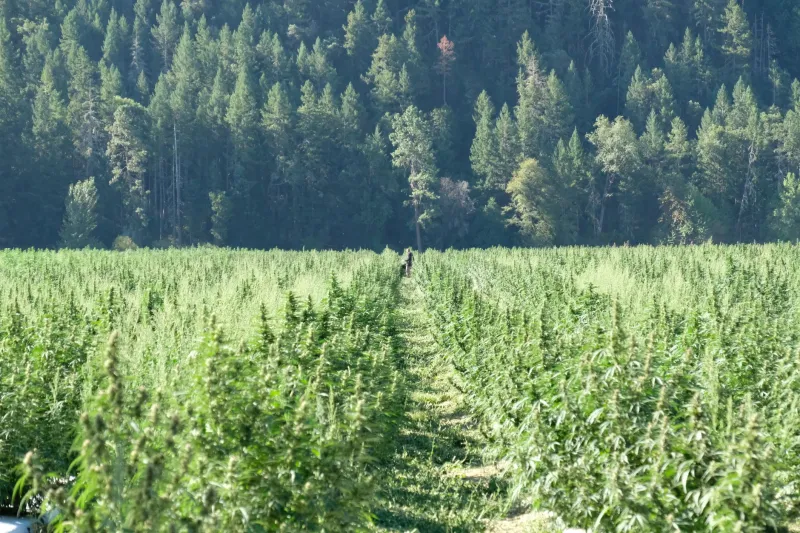
For decades, small farmers in Northern California's Emerald Triangle — Humboldt, Trinity, and Mendocino counties — supplied the entire country, back when 'the entire country' meant a network of underground buyers and loyal customers who knew exactly whose garden their flower came from. Legalization was supposed to be their victory lap. For many, it's turned into a fight for survival.
The Math That Doesn't Work Anymore
Here's the blunt reality: wholesale flower prices have cratered in California, dropping to levels that make small-batch farming genuinely hard to sustain. A boutique farm growing a few thousand plants on terraced hillsides has labor costs, permitting fees, and taxes that a 40-acre greenhouse operation in the Central Valley can spread across a vastly larger harvest.
Corporate operators aren't evil for exploiting economies of scale — that's just how agriculture works. But the result is that the farmer who spent 30 years dialing in a phenotype of Mimosa or Blue Dream, curing it slowly and hand-trimming every bud, is competing on price with flower grown for volume, not character.
Several small farms have already folded. Others have gone 'backwards' — returning to the legacy market they came from, because the legal market pays less than the gray one did.
What Adaptation Actually Looks Like
The growers sticking around aren't waiting to be rescued. They're getting creative.
Some have leaned hard into branding, treating their farm like a winery treats an estate — named cultivars, harvest dates, sun-grown certifications. Others have pooled resources into co-ops and collectives that share distribution costs and negotiate with dispensaries as a bloc, something a lone farmer could never do.
There's also the agritourism route. A handful of Triangle farms now host licensed tours and tastings, betting that cannabis can follow the wine country playbook. It's a slow build, but it converts quality into an experience corporations can't easily replicate.
And then there's the sun-grown angle. Indoor flower carries a massive carbon footprint, and as consumers get savvier about that, outdoor and greenhouse craft flower has a story to tell — one that's authentic, not manufactured by an ad agency.
Why Consumers Should Care
It's tempting to shrug and grab the cheapest eighth on the menu. But there's a real cost to a market that consolidates down to a handful of giants.
Genetic diversity is the first casualty. Legacy farmers kept rare cultivars alive through decades of prohibition. When they exit, the gene pool narrows to whatever clones grow fastest in a commercial facility.
Quality is the second. Not to romanticize — plenty of corporate flower is perfectly good. But craft cannabis, like craft beer or small-farm produce, represents a ceiling of quality that only exists when someone obsessive is running the show.
The Bottom Line
The next few years will decide whether American cannabis looks more like wine country or more like Big Ag. Every purchase is a small vote. If you care about where your flower comes from, check the label, ask your budtender who grew it, and when you find a small farm doing great work — stick with them.
The Emerald Triangle built this culture. Whether it survives the culture getting legal is partly up to the people buying it.