Follow the Money: Where Your $60 Actually Goes Before the Bud Hits the Counter
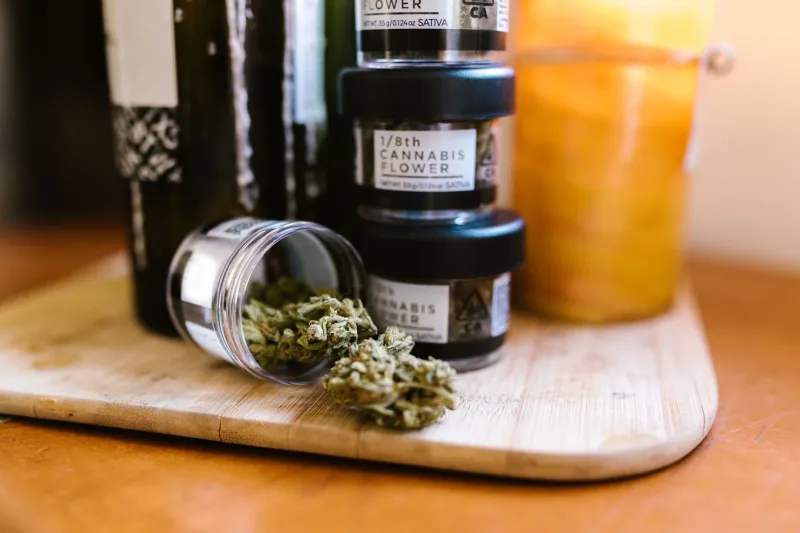
You're standing at the counter, and the budtender just rang you up for $55 before tax. For an eighth. Meanwhile, your buddy in Michigan mentions his dispensary sells top-shelf flower at $25 an eighth, and a farm in Humboldt would sell you a whole ounce of the same genetics for less than that price of that little glass jar.
So where does all that money actually go? It's not a mystery — it's just an industry that doesn't really want to talk about it.
The Tax Sandwich
Let's start with the part nobody can avoid: taxes. In states like California, cannabis gets taxed at multiple layers before it ever reaches the shelf. There's a cultivation tax on the weight of the flower coming off the farm, an excise tax (15% statewide, on top of everything), and then your regular local and state sales taxes stack on top of that at the register. Some cities add their own cannabis-specific levies on top of that — 10% here, 15% there.
By the time a $50 eighth lands in your hand, somewhere between $12 and $20 of it can be pure tax, depending on where you live. That's not a dispensary being greedy. That's the cost of legality, and it's baked in whether you buy the premium stuff or the bargain bin.
The Grower's Cut Is Smaller Than You Think
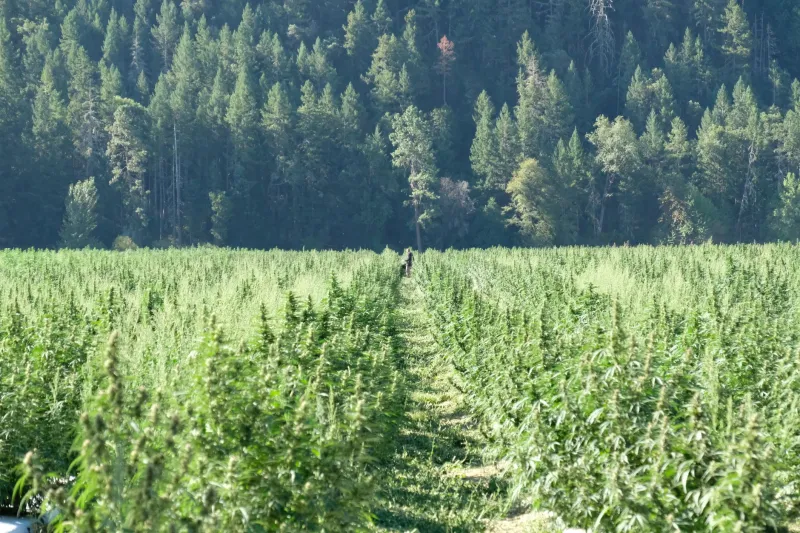
Here's the number that surprises most consumers: the farmer who actually grew your flower often gets paid pennies on the dollar. Wholesale prices in legacy-stronghold states like California and Oregon have cratered in recent years — sometimes $400 to $600 a pound for flower that will retail, once it's divided into eighths, for $2,500 or more per pound equivalent.
Growing indoors under thousands of watts of LEDs is expensive. Add in compliance costs, lab testing, packaging requirements (childproof containers, labels, barcodes), and distribution middlemen, and the price has doubled or tripled before a single jar hits a dispensary shelf.
Overhead: The Quiet Price Killer
Dispensaries aren't running on fumes. Legal cannabis businesses can't take normal federal tax deductions under IRS Code 280E — meaning they pay taxes on gross profit, not actual profit. Insurance, security systems, cash handling (many banks still won't touch them), and commercial rent in zoned-limited areas all push costs up. A retail spot in downtown Denver or Los Angeles isn't cheap, and every dollar of that rent shows up in the menu.
So How Do You Stop Overpaying?
You can't repeal taxes, but you can absolutely shop smarter:
- Buy bigger when it makes sense. Price per gram drops significantly on half-ounces and ounces. If you're a regular consumer, the math is obvious.
- Hunt the deals. Every dispensary has slow days — many run weekday specials, first-time customer discounts, or loyalty programs. Tuesday flower deals are a real thing.
- Don't sleep on small-batch or "shelf-bottom" flower. Sometimes great bud ends up in the discount tier just because of packaging overstock or an older harvest date.
- Check the harvest date. Freshness matters, but a six-month-old jar of well-cured flower at 30% off can be a steal.
- Compare across stores. Menus are online. Ten minutes of comparison shopping can save you $15 on the same strain.
Will Prices Ever Come Down?
Honestly? It's a split decision. In mature markets with oversupply — Oregon, Michigan, parts of California — prices have already fallen hard, and $20 eighths of genuinely good flower exist. Nationally, the biggest lever is federal reform. Rescheduling, banking access, and interstate commerce would all shave real costs off the supply chain.
Until then, the flower's the same whether you pay full freight or catch the Wednesday special. Shop like you mean it.